To skate in the wind, get lower and narrower into a headwind, shorten your stroke so you keep turning the legs over, and judge the session by effort and time instead of average speed. Then plan the route so you head out into the wind and come home with it behind you, because the second half is where a tired skater needs the help.
Wind is the one road condition skaters complain about most and prepare for least. Heat you can drink for, rough tarmac you can read, but a steady headwind quietly flattens your average and makes you wonder whether your bearings are dying. They probably are not. Here is what the wind is actually doing, and what you can change about it.
What a headwind really costs you
Air resistance climbs with the square of the speed you are moving through the air. Double the airspeed and the drag is roughly four times greater, and the power you need to push through it climbs faster still. That is why a headwind punishes fast skaters far more than slow ones, and why the same wind that barely bothers a beginner at 15 kph can feel brutal at 30 kph.
The important part is that your watch measures your speed over the ground, while the air only cares about your speed through the air. Skate at 25 kph into a 15 kph wind and the air is pushing back as hard as it would at 40 kph, but you are only being paid 25 kph of ground speed for that effort. You are doing expensive work at a cheap speed. That mismatch is the whole problem, and it explains the two mistakes skaters make in wind: chasing the usual average until they blow up, or abandoning the session altogether.
Bending the knees is not the same as getting low. The skater on the left has the knee bend but the chest is still facing the wind. Schematic and not to scale.
Position comes first, and it is free
Before you think about a single piece of equipment, fix your shape. Frontal area is the biggest variable in the whole equation and you control it with your hips and your back, not your wallet. If the low stance itself is new to you, start with our guide to the basic position and then apply these points to it.
- Drop your chest closer to your thigh. Bending the knees more is not the same thing, because a deep knee bend with a tall chest still leaves your torso facing the wind.
- Flatten the back. A flat back sheds air cleanly, while a hunched upper back makes a shoulder shelf that the wind stacks up against.
- Tuck your head so your helmet sits in line with your back, with your eyes still up the road. A head poking up above the shoulder line is a surprisingly large drag source.
- Carry one arm on the back. Two arms swinging out wide in a headwind add width exactly where you cannot afford it, and our guide to what to do with your arms covers when to carry and when to swing.
- Keep the recovery tight. A trailing leg that swings wide and high behind you is another surface for the air to find.
If this low shape makes your lower back shout within a few minutes, it is often a mobility and strength limit rather than a technique fault, and off skate work usually helps more than fiddling with your stance. We go into that in why your lower back hurts when skating. Treat genuine pain differently from honest discomfort though: if it is sharp, if it radiates into a leg, if you get any numbness, or if it is still there several days later, see a doctor or a physiotherapist before you train through it.
What to do with your stroke
The instinct in a headwind is to push harder and longer. It is the wrong instinct. A long, slow, heavily loaded push into wind is where skaters stall out, because the resistance is constant and your leg simply runs out of force before the glide ends.
Shorten the stroke and raise the cadence. You want more pushes per minute, each slightly less loaded, so the leg keeps cycling and the muscle keeps getting blood. Think of it as dropping into an easier gear. The glide phase is the part the wind steals from you, so stop paying for it: set the skate down, push, recover, repeat, and accept that the roll you normally enjoy is not there today. If that trade off interests you, we have a whole piece on stride rate versus stride length.
Keep the push sideways while you do it. A push that drifts backwards wastes effort you can no longer spare, and wind is exactly when tired technique starts to leak. Then resist the urge to stand up for a breather at the worst possible moment. Standing tall into a headwind is like opening a parachute, and the few seconds of relief cost you far more than they give. If you need to recover, recover low and soft.
Crosswinds are the ones to respect
A headwind makes you slow. A crosswind can put you on the floor. Side wind pushes your upper body while your wheels stay locked to their line, so you end up leaning into the wind to stay upright. The danger is that the push is rarely steady. It comes in gusts, and it stops suddenly where something blocks it.
The classic place to get caught is a gap: between two buildings, past the end of a wall, at the mouth of a bridge or a flyover, or coming out from behind a parked truck. Wind funnels and accelerates through gaps, so you get a shove right where you also have the least space. Just as nasty is the opposite moment, when you are leaning hard against a crosswind and then skate into shelter, because the lean you are holding has nothing left to lean against.
Wind speeds up as it squeezes through a gap, so the shove lands at the gap and not before it. Ease the effort and leave yourself room on both sides on the approach.
Handling a crosswind is mostly about staying boring. Get low, because that gives the wind less of you to push and less leverage to tip you with. Keep your weight centred over the skates and cut out the long one footed glides, since a gust that arrives mid glide has nothing to argue with but your one loaded ankle. Leave a wider buffer from the kerb, from traffic and from other skaters than you normally would, because on a gusty day the wind picks your line, not you. If you are in a group, side wind also moves where the shelter sits, which we cover in the article on pack skating and drafting.
A tailwind flatters you, so use it on purpose
Wind behind you is lovely and slightly dishonest. Your average speed jumps, your legs feel strong, and none of it means your fitness changed this morning. That cuts both ways.
A tailwind personal best is not evidence of progress, so test yourself on a calm day or over an out and back route that includes both directions. More usefully, spend the tailwind on purpose. It is the one time the road lets you hold a very high leg speed without drag capping you, which makes it the best place on the whole loop for overspeed work: short efforts at a cadence above anything you could sustain into the wind, teaching the legs to turn over quickly.
Plan the route before you leave
The single best decision you make on a windy day happens before you leave. On an out and back route, go out into the wind and come home with it. It feels backwards, because the hard part comes when you are fresh, but it beats being stranded eight kilometres from home into a headwind on empty legs, which is how skaters end up walking.
On an out and back loop, take the headwind leg first. The wind does not get easier later, but your legs definitely get worse.
A few more route habits worth having. Pick loops with shelter in them, such as tree lined stretches or roads that run behind a wall, and save your interval efforts for those sections. Drop the long open stretches on very windy days and use a smaller, more sheltered loop even if it means repeats. And if you train on a track or a closed circuit, note which half of the lap faces the wind and expect your splits to be lopsided all session. Treat those splits as information about the wind.
Which gear earns its place in wind
This is where skaters lose money. Wind resistance is about your shape and your clothing. Rolling resistance, which is bearings and wheels, is a separate loss that matters most when you are slow and matters relatively less as the air takes over. So in a headwind, the gear that helps is the gear that cleans up the air, and fresh bearings are about making the rest of the ride less miserable.
| What you change | Effect in a headwind |
|---|---|
| Lower, flatter position | The largest single gain available, and it costs nothing |
| Close fitting race suit instead of a loose tee | Real and noticeable, because loose fabric flaps and acts like a sail |
| One arm carried on the back | Useful, less width exposed to the air |
| Clean, well oiled bearings | Helps the whole ride, but does not fight the wind |
| Chasing a bigger wheel size | No help against the wind, since it lifts you slightly higher instead of making you narrower |
In practice that means a close fitting top earns its place on a windy day. A flapping training shirt is genuinely slower, so a LiveLica Pro Skin Suit is worth putting on for a hard windy session, even when it is only training. Our article on why a skin suit makes you faster has the physics behind that, and the sizing guide is worth a look first, since the Pro Skin Suit currently runs in sizes 8, 10 and 12.
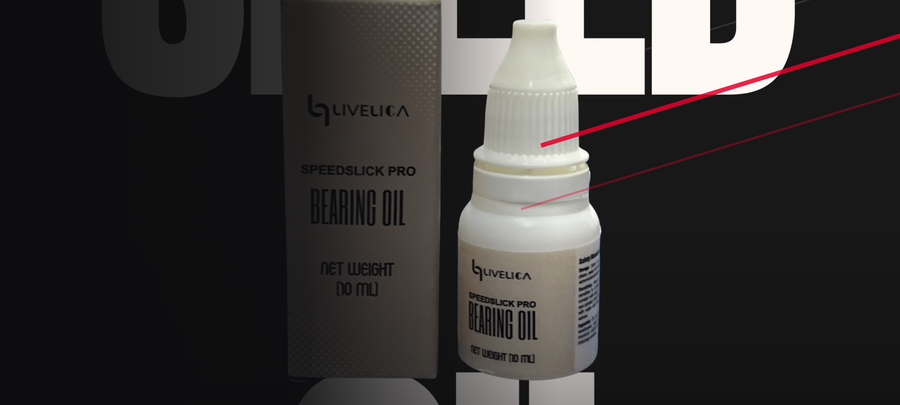
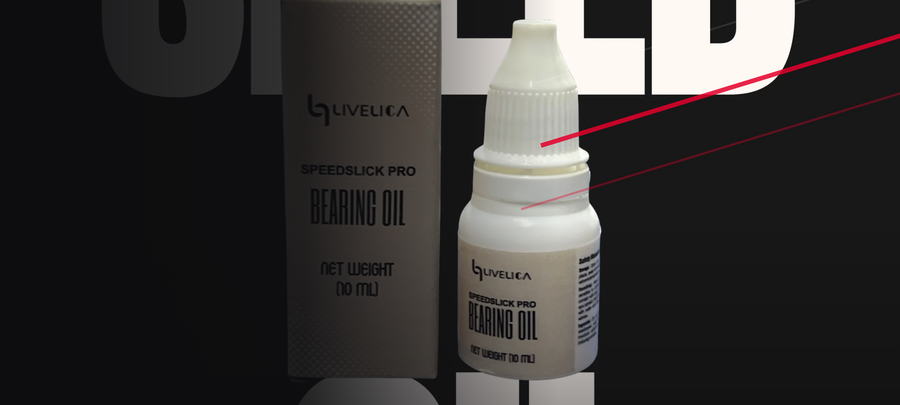
On the rolling side, the point of clean bearings is to remove them as a variable. If your wheels spin freely, you know the air is what is slowing you and you can stop taking your setup apart looking for the problem. A clean set from the Power Bearings range and a drop of Speedslick Pro bearing oil do that job. Windy days also tend to be dusty days, so expect the wind to put grit into everything you own, and a wipe down afterwards saves you a full strip and clean later. We go into the dust and grit side of that in skating in Indian conditions.
Then there is the gear that has nothing to do with speed. Gusty days are the days you are most likely to get put down by something you did not cause, so wear the gloves you keep skipping. Hands land first, and on open windy roads they land on tarmac, which is also the argument in do you need gloves for inline speed skating. The same thinking applies to your lid. A certified, well ventilated helmet with a dial fit, such as the LiveLica ventilated skate helmet, lets you snug the fit before you drop into a low position and take up any slack mid session without stopping to refasten straps. Our helmet guide covers what to look for.
Running your numbers on a windy day
Average speed is the wrong measure in wind. It will either depress you or push you into a session you did not plan, so work in time and effort: skate for the duration you intended at the effort you intended, and let the distance land wherever it lands. If you want a scale to put numbers on that effort, there is a five level one in our inline speed skating training plan.
If you are doing intervals, hold the effort constant and let the pace drop. A hard interval into a headwind is still a hard interval, and it is arguably better training for the legs because the resistance is steady and does not come and go with the road. If you are doing steady volume, hold an easy breathing rate even if that means skating slower than feels respectable. Wind is the classic way an easy day quietly turns into a hard one, because the effort creeps up to defend the speed you are used to seeing.
A windy day session worth doing
If your loop has an exposed half and a sheltered or downwind half, you have a built in workout. Warm up for fifteen minutes easy, both directions, getting your low position settled. Then do six repeats of two minutes hard on the exposed, into the wind half, holding the low shape and a quick cadence while completely ignoring your speed, with the sheltered or downwind half skated easy as the recovery. Finish with ten minutes easy and, if you still have legs, four short overspeed sprints of about fifteen seconds with the wind behind you, concentrating on fast feet. The wind does the work of a resistance session on one half and a leg speed session on the other, which is hard to set up deliberately on a calm day.
When to call it off
Some days are not training days. Shorten the loop, move indoors or stay home when gusts are strong enough to shift you sideways between strokes, when you are on roads with traffic and cannot hold a predictable line, when debris, branches or dust are blowing across the road, or when the air is carrying so much dust that you are squinting and breathing badly. If your usual loop is already broken tarmac, be stricter still, because a gust landing on a bad patch is far worse than either on its own, as our piece on skating on rough roads explains.
On the dust point, treat your airways and eyes as worth protecting. If a dusty windy session leaves you coughing, wheezy or with sore eyes for more than a day or two, or if you ever get chest tightness or breathlessness that does not settle with rest, see a doctor before you train through it. General training advice stops at that line.
Frequently asked questions
How much slower should I expect to be in a headwind?
Slower than feels fair, and the faster you normally skate the bigger the hit. Because drag rises with the square of airspeed, a wind that barely troubles a casual skater will cost a fast one a lot. Guessing a figure is pointless, so use an out and back route and compare the two legs to see what today's wind is worth on your roads.
Does a headwind change how I should race in a pack?
Yes, and it usually rewards patience. Into a headwind the shelter behind other skaters is worth far more than it is on a calm day, so attacking from the front into the wind is an expensive way to lose a race. Sit in, take short turns at the front so nobody blows up, and save your move for a sheltered stretch or the run to the line. There is more on reading the shelter in our pack skating guide.
Do harder or softer wheels help in the wind?
No. Wheel hardness changes grip and rolling resistance on the surface, not how much air you have to push out of the way. Choose your wheels for the road and the temperature as usual, and fix your position if you want to go faster into the wind. If your current wheels are badly coned or worn flat on one edge, rotate them, because that costs you every day, windy or not.
Should I train with a heavier setup to simulate wind?
There is no need. A headwind already loads you at race speed with race technique, which beats anything you can bolt on. Use the windy days as your resistance days and the calm days for top speed work.
What is the best position for my arms in a crosswind?
Keep both hands available. Carrying an arm on the back is the aero choice in a steady headwind, but in gusty side wind you want a free hand to balance with and react. Speed is not the priority when the wind is picking your line. Our arms guide has the full picture.
A windy day checklist before you leave
- Check which way the wind is blowing and pick the direction you will skate out in, so the headwind leg lands on fresh legs.
- Pick a loop with shelter in it, and decide now which stretch gets your hard efforts.
- Wear something close fitting. A loose jacket on a windy day is a sail you are paying for.
- Spin each wheel before you go, so any drag you feel later can be blamed on the air.
- Set the session in minutes and in effort, and let the distance look after itself.
- If it is gusty on open roads with traffic, shorten the loop or skate somewhere else. Choosing a different day is a sound call.